

The Transfer Of Energy By Collisions Between Molecules In A Solid Is

Elastic Collision Science Flashcards Science Student Science Facts
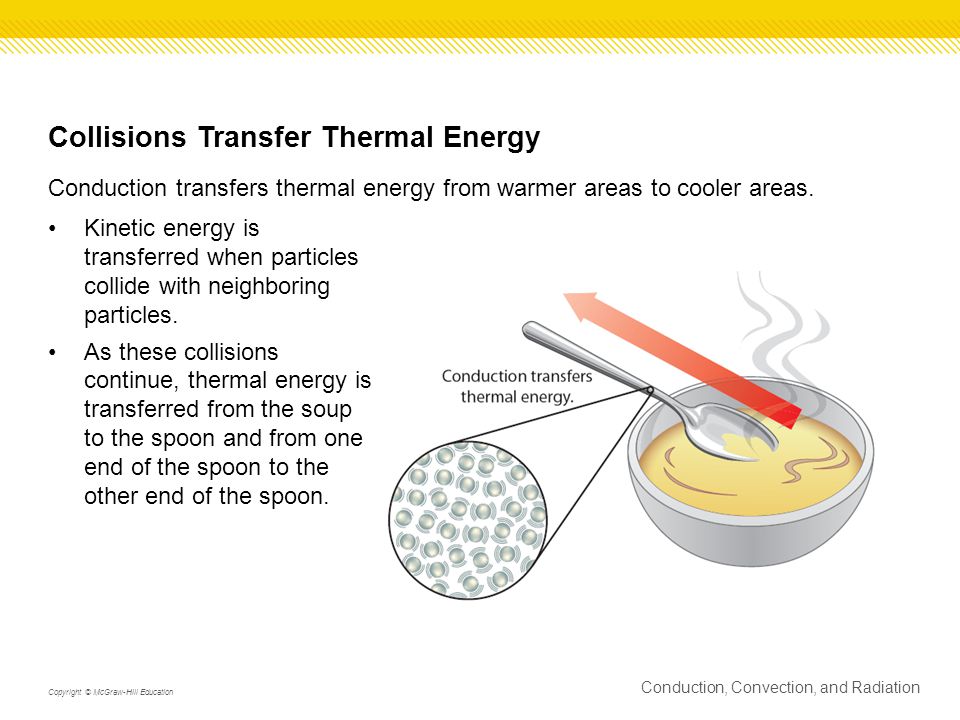
Conduction Conduction Is The Transfer Of Thermal Energy By Collisions Between Particles In Matter Conduction Occurs Because Particles In Matter Are In Ppt Download
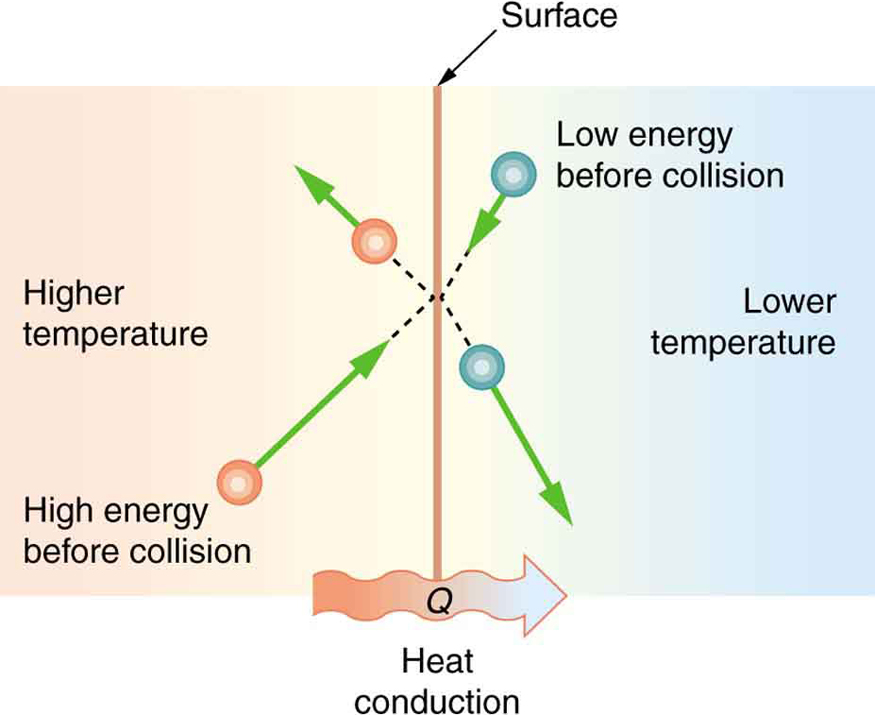
Thermal Conduction Energy Education

Conduction Conduction Is The Transfer Of Thermal Energy By Collisions Between Particles In Matter Conduction Occurs Because Particles In Matter Are In Ppt Download

Processes For Transfer Of Thermal Energy Thermal Energy Thermal Energy Transfer Energy Transfer

Difference Between Conduction Convection And Radiation With Table Conduction Convection Radiation Conduction Individual Behavior Chart

TV and VV energy transfer in collinear collision of two diatomic molecules.
The transfer of energy by collisions between molecules in a solid is. 432018 Conductance is the result of the collision between molecules atoms and electrons. The amount of energy transferred during a collision depends on the weight and speed of the moving object. Frster energy transfer or energy transfer at distance occurs between two molecules a donor the excited fluorophore and an acceptor a chromophore or a fluorophore.
The rate of collision between the molecules and the walls of the cylinder increases. The efficiency of translational-to-vibrational TV energy transfer is one of the key factors determining the fate of scattered ions. Thermal conduction is the transfer of internal energy by microscopic collisions of particles and movement of electrons within a body.
An elastic collision is an encounter between two bodies in which the total kinetic energy of the two bodies remains the same. Transfer of kinetic energy of atoms or molecules by collision between neighboring atoms or molecules o Heat conductivity Ratio of rate of heat transport across an area to a temperature gradient o Some materials have a higher heat conductivity than others Solids eg metal are better conductors than liquids and liquids are better than gases eg. The energy is transferred by resonance ie the electron of the excited molecule induces an oscillating electric field that excites the electrons of the acceptor.
When the two bodies are in contact collisions between molecules transfer kinetic energy. 10112019 Collision-induced energy transfer is a fundamentally important process in many gas-phase chemical environments such as combustion 1 atmospheric chemistry 2 astrochemistry 3 and chemical laser. Chemical Physics 1984 91 1 13-26.
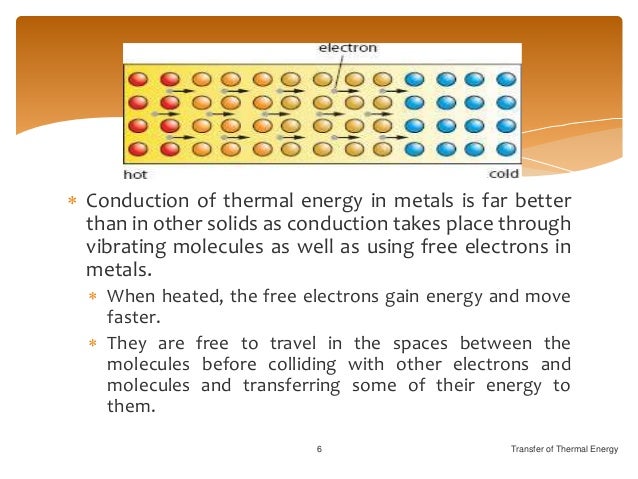
The rate of heat transfer s the function of temperature difference and medium of heat transfer. Conduction allows gas and electric stoves heat up pans. Form of heat transfer where heat energy is directly transferred between molecules through molecular collisions or direct contact.
The colliding particles which include molecules atoms and electrons transfer disorganized microscopic kinetic and potential energy jointly known as. Generally the molecules of a gas underlie collisions which may perturb the phase of a radiating molecule and additionally cause transitions between the molecular states. A quasiclassical trajectory study of vibrational energy transfer in collisions involving intermolecular attraction of moderate strength.

Thermal Transfer Summary And Applications Updated Thermal Energy Physics And Mathematics Thermal Energy Transfer
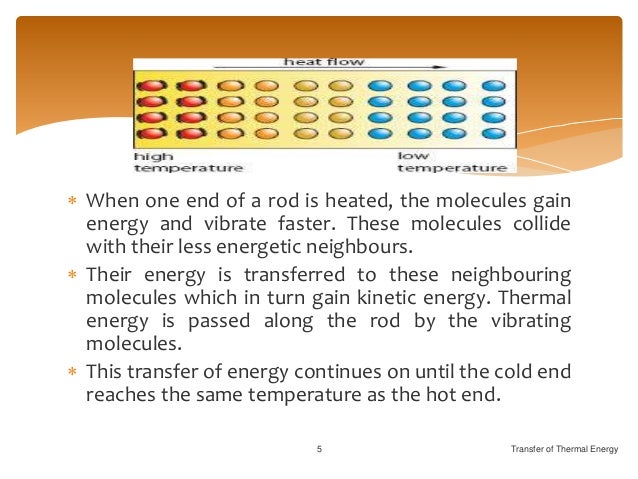
Transfer Of Thermal Energy

Work Energy And Power Worksheet Work Energy And Power Concept Map Mtg Physics For Physics Lessons Physics Formulas Work Energy And Power

The Nature Of Heat 6 2 Heat Heat Is Thermal Energy That Flows From Something At A Higher Temperature To Something At A Lower Temperature Heat Is A Form Ppt Video Online Download
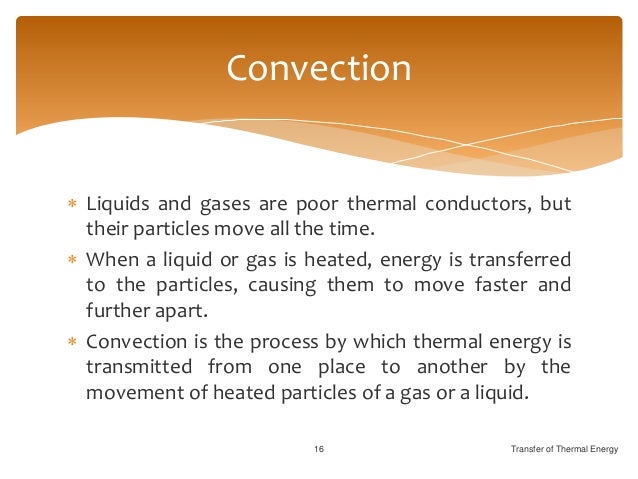
Transfer Of Thermal Energy
Transfer Of Thermal Energy
Sound Energy Reading Passage And Comprehension Questions Video Video Reading Passages Reading Comprehension Practice Sound Energy

Chemistrynotes Aestheticnotes Studyblr School Study Tips Study Notes School Notes

Easy Experiment To Demonstrate The Conduction Of Heat In Metals Class 7 Conduction Easy Science Experiments Heat Energy

Concept Map Work Power Energy Part 1 Physics Classroom Physics Lessons Basic Physics

Image Result For Adiabatic System Internal Energy Chemistry System
Transfer Of Thermal Energy

Image Result For Hydrophobic Molecules Molecules Ap Chem Water Molecule
