

Transfer Function Bibo Stability
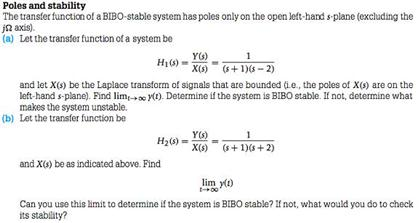
Solved Poles And Stability The Transfer Function Of A Bib Chegg Com
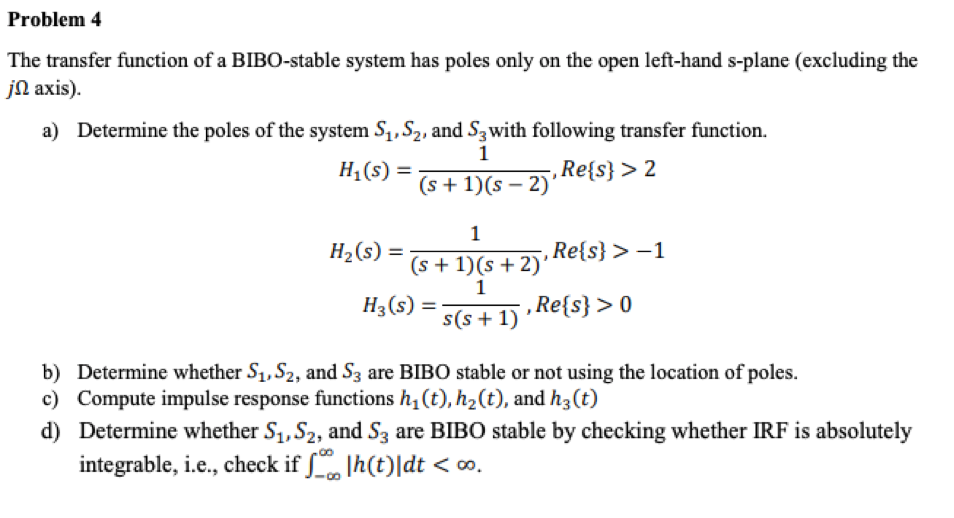
Solved Problem 4 The Transfer Function Of A Bibo Stable S Chegg Com

Ee 4262 Digital And Nonlinear Control Transfer Function

How Do I Check The Stability Of A Discrete Transfer Function Electrical Engineering Stack Exchange
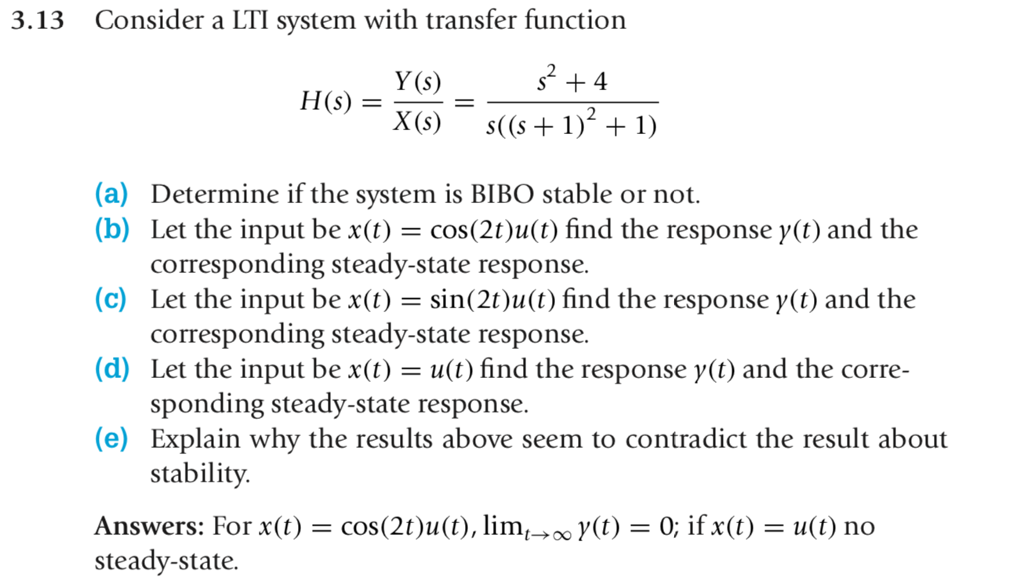
Solved 3 13 Consider A Lti System With Transfer Function Chegg Com
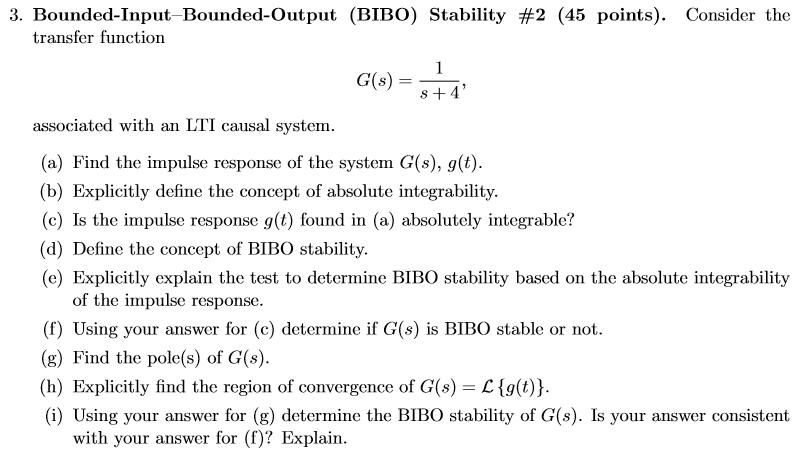
Solved Bounded Input Transfer Function 3 Bounded Output Chegg Com
152005 45250 PM.
Transfer function bibo stability. BIBO Stability Consider the system G with transfer function 1 Ga s Is the system G BIBO stable. Pgof the transfer function form. A system is BIBO stable if every bounded input signal results in a bounded output signal where boundedness is the property that the absolute value of a signal does not exceed some finite constant.
Viewed in the complex plane it is clear that the magnitude of Y s will go to zero at. To my knowledge as long as the poles of the transfer function are in the left half plane then the system is stable. The transfer function has a pole with a real part that is not less than zero the pole is at s 1.
Begingroup polfosol but then if BIBO stability is linked to the poles of the transfer function which is the difference between simple stability ie all poles with non-positive real part and BIBO stability. If a system is BIBO stable then the output will be bounded for every input to the system that. The output excited by ut sin0t for t 0 approaches jGj0jsin0t Gj0.
If a system is AS then it is also BIBO stable as the poles of the transfer function are a subset of the poles of the system. A stable system have close loop transfer function with poles only in the left half of s-plane. If the coecients f.
Theorem BIBO Stability and Steady State Response. The system is BIBO stable if and only if all the poles are in the left half of the complex plane. Of stability in the control systemliterature the most common one used for transfer functions is the bounded-input-bounded-output stability BIBO which states that for a BIBO stable system for any bounded input or finite amplitude input the output of the system.
2232021 Bounded input bounded output stability also known as BIBO stability is an important and generally desirable system characteristic. A Let the transfer function of a system be and let the poles of X sbe on the left-hand s-plane. Is that in different conditions.
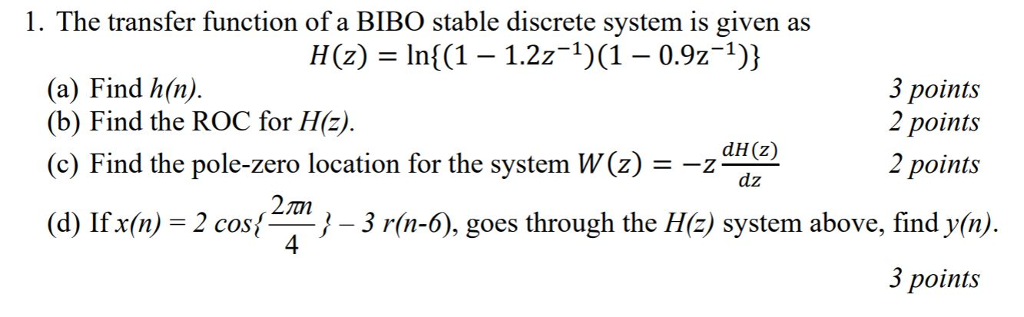
Solved 1 The Transfer Function Of A Bibo Stable Discrete Chegg Com

Transfer Functions Sudaspace
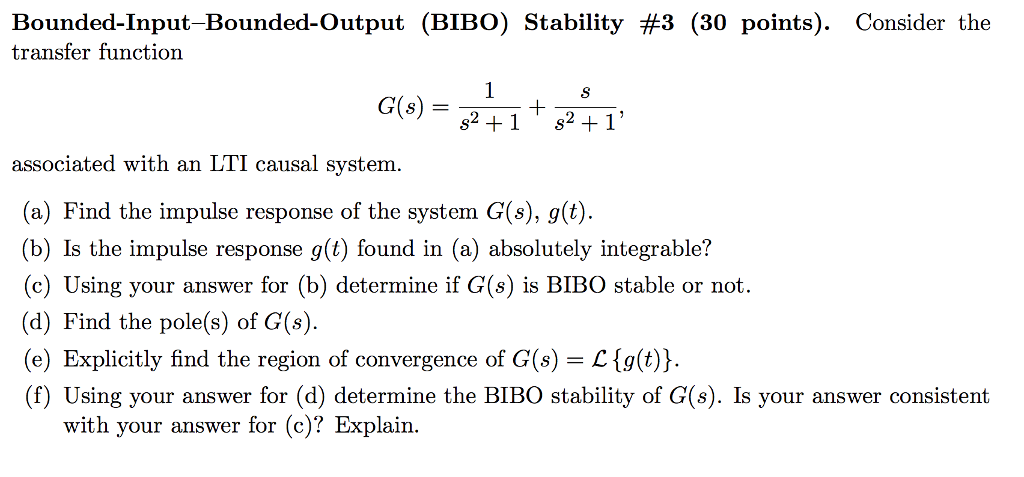
Solved Consider The Transfer Function G S 1 S 2 1 Chegg Com
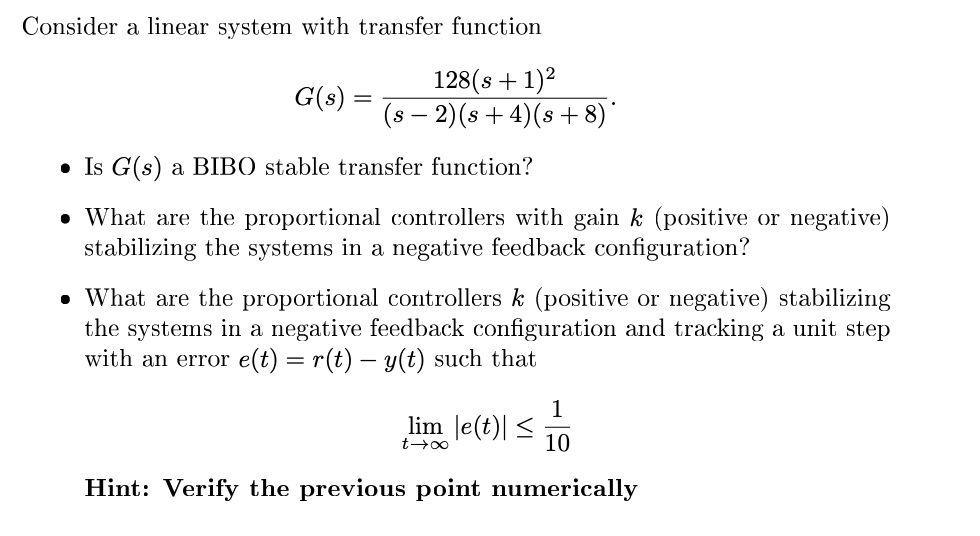
Solved Consider A Linear System With Transfer Function 12 Chegg Com
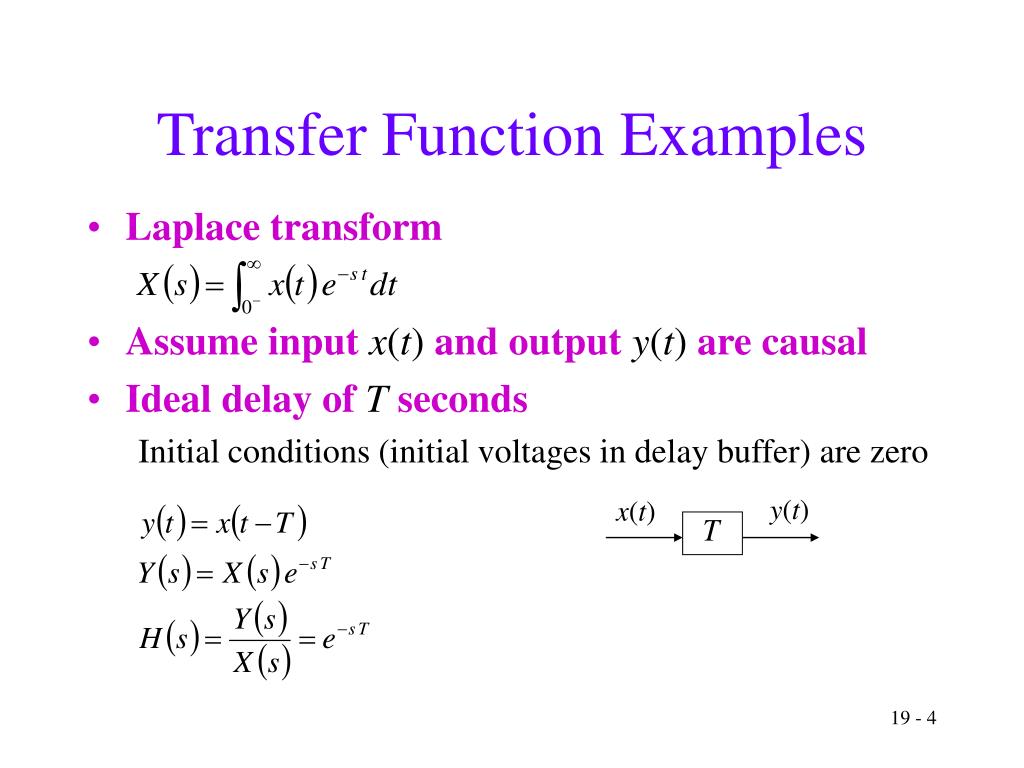
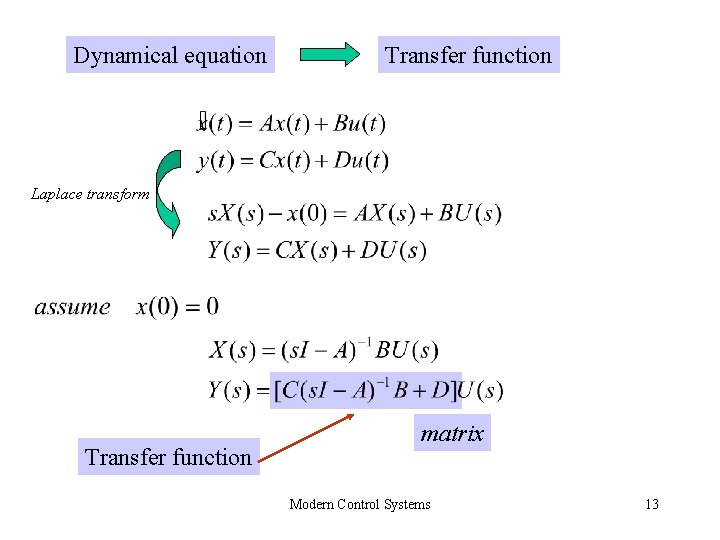
Ppt Transfer Functions Powerpoint Presentation Free Download Id 4291051
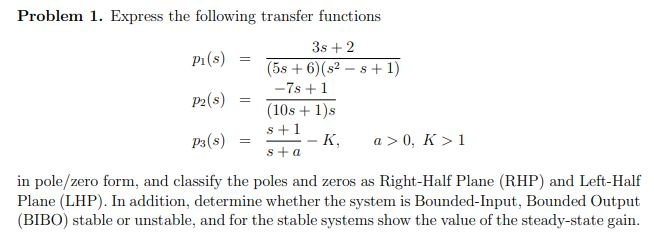
Solved Problem 1 Express The Following Transfer Function Chegg Com
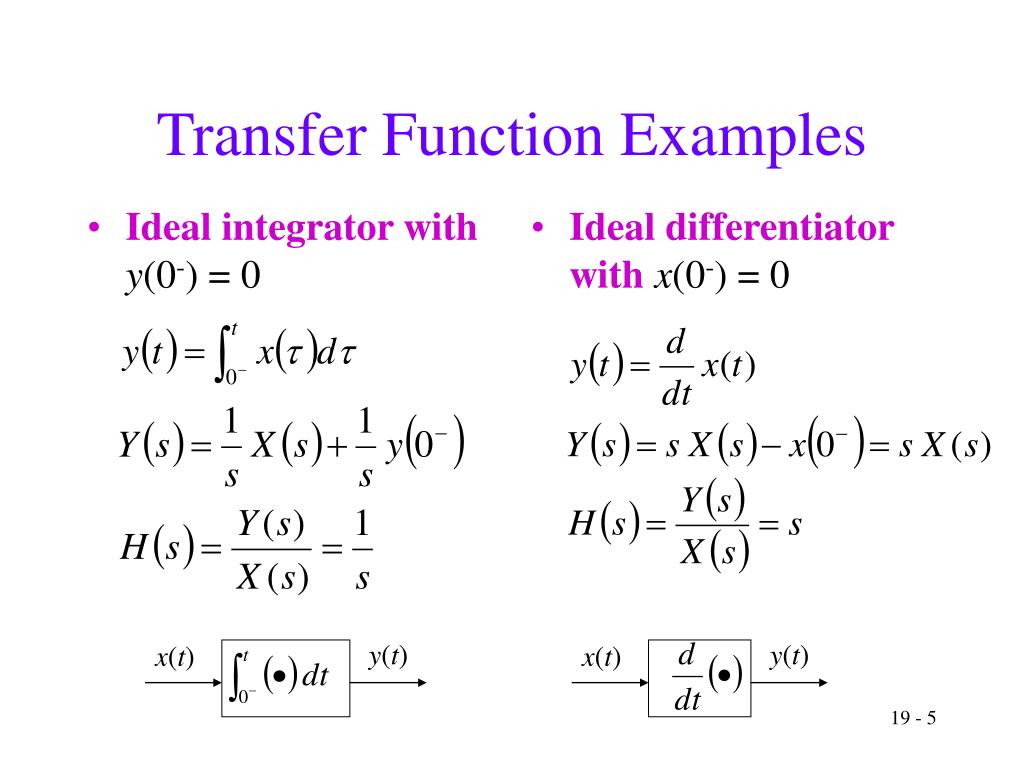
Ppt Transfer Functions Powerpoint Presentation Free Download Id 4291051
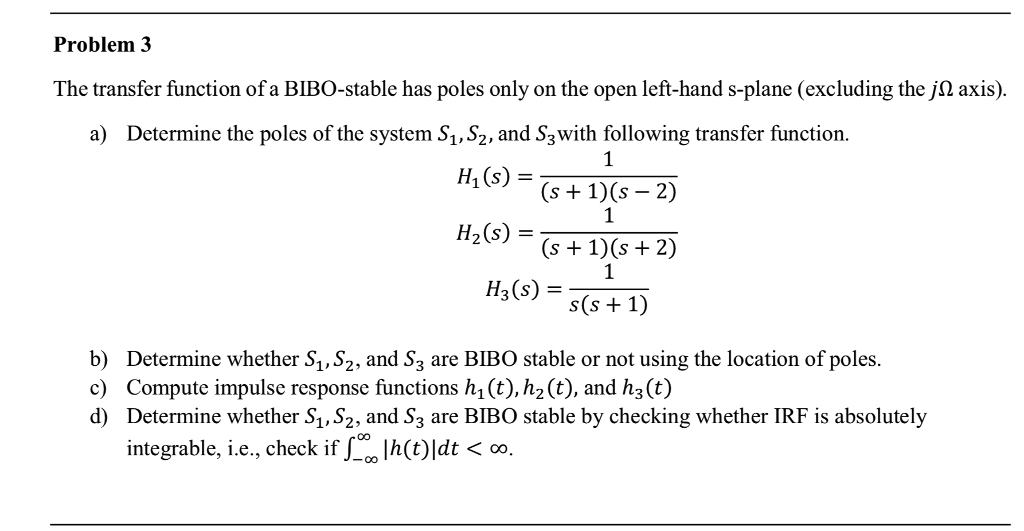
Solved Problem 3 Axis The Transfer Function Of A Bibo St Chegg Com
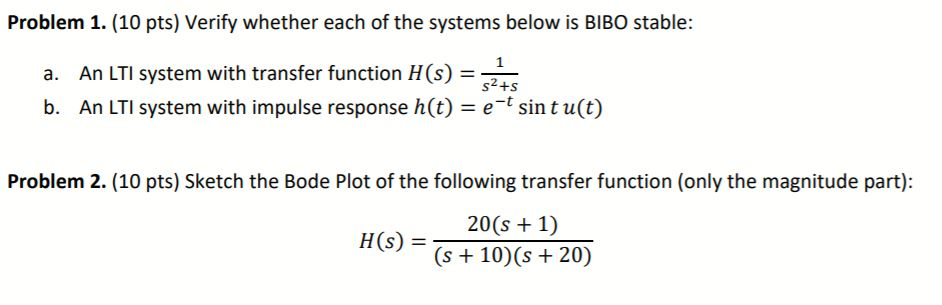
Solved Problem 1 10 Pts Verify Whether Each Of The Sys Chegg Com
Qeui9jhjaa T0m
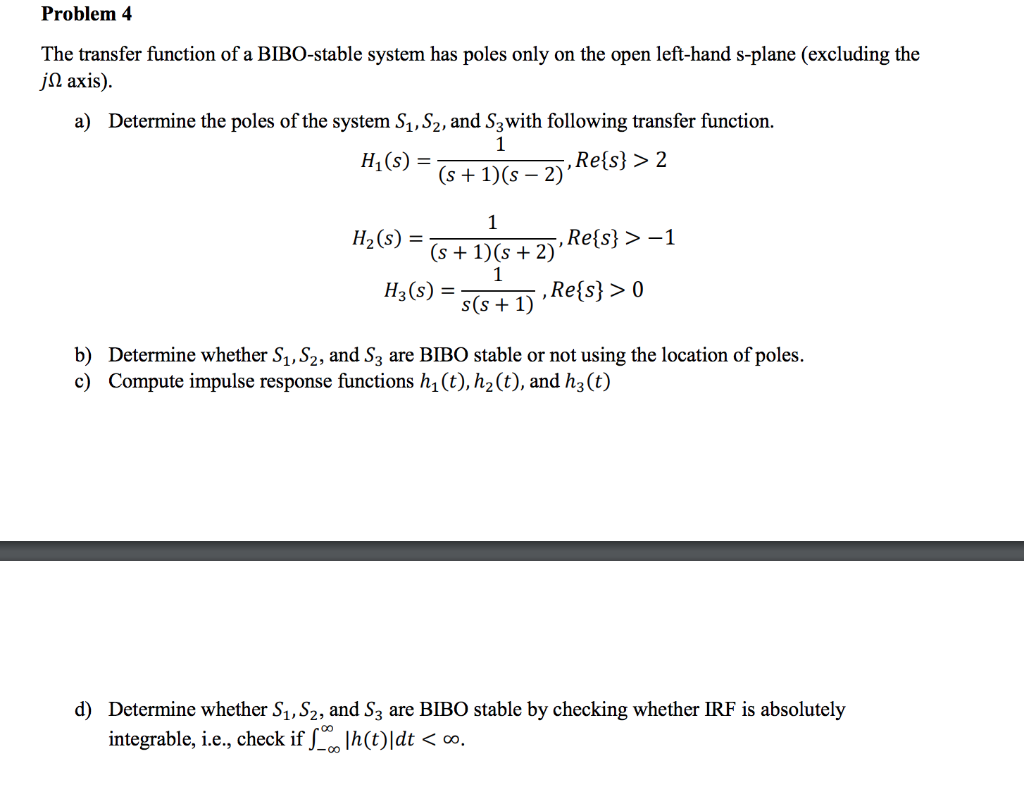
Solved Problem 4 The Transfer Function Of A Bibo Stable S Chegg Com

Transfer Functions Ppt Download
Y Is 1517 You Are Given An Unstable Plant With A Transfer Function Gis T You Are To Design A Proportional Controller I S I Such That Course Hero
